March 17, 2018

A FEW OF OUR FAVORITE THINGS IN GREENFIELD, CALIFORNIA


Carol writes:  When Al and I lived in California in the mid-1970s, we felt like we were inhabiting a little slice of heaven.  Back in those days, aggravating traffic, sky-high real estate prices and overcrowding had not ventured onto our radar screen.  Today, however, a lot of the shine has come off of the California lifestyle, and many residents we have spoken to have readily admit this truth.  Perhaps that is why we have come to treasure the less beaten path of California’s past that we have discovered on the Central Coast.

The 21 missions in the California Mission System are great venues for a look back in time at life as it used to be in what Mexico called Alta California.  From our next camping home in Greenfield, California, 


we had close access to two additional missions. 


Some mission sites are quite fascinating because they offer a glimpse at actual historical buildings original to the mission.  Such was not the case at Mission Soledad.  


The chapel was only of moderate interest since it was actually a 1954 reconstruction of the original adobe mission chapel which was destroyed by a flood almost two centuries ago.


The chapel was rebuilt in the original humble style and was unusual in that the statue of the Blessed Virgin was dressed all in black in her niche above the altar, in honor of the chapel being  dedicated to the sorrowful mother of Christ.


The outdoor courtyard did not have the well-gardened look we had come to expect at all the other missions we had visited.  An unimpressive bare remnant of the mission’s original adobe walls was preserved under roof at the rear of the property.


Our visit to Mission San Antonio de Padua, which was founded and named by Father (Saint) Junipero Serra in honor of St. Anthony of Padua, was quite a contrast in style.


Clearly, with more access to funds, in addition to small commercial ventures such as retreats, careful restoration was able to be financed after significant damage from the San Francisco earthquake of 1906.  


The chapel offered a perfect atmosphere for quiet spiritual reflection.


The grounds were appealing in their authenticity. 


The tiny town of Greenfield offered very little of interest to us.  It looked like a town that Father Time had forgotten, with nothing but very small businesses, all of which served its nearly 100% hardworking Hispanic population.  However, with ragged volcanic peaks just visible far in the distance, Greenfield was correct in its boast that it was the “Gateway to the Pinnacles.”

Pinnacles became our 59th and newest national park in 2012.  Documentary filmmaker Ken Burns christened the national park system “America’s Best Idea.” As such, he played a pivotal role in supporting the elevation of Pinnacles to national park status.  The ancient volcanic history of Pinnacles and the vast tectonic forces along the San Andreas Fault that created it have now been preserved as a critical record of geologic time. 

We were told by a ranger that Pinnacles is a rare habitat for California condors and that we should look for these massive birds soaring high above on afternoon thermal updrafts.  Alas, despite a perfectly clear sunny day, apparently the condors weren’t in a soaring mood the day of our visit. 


We had a premium seat for a lunch spot along the trail,


as we hiked past access points for rock climbing, one of the park’s main draws.

We hiked down to the entrance of a rare so-called talus cave.  Pinnacles has some of the largest and most accessible talus caves in the world.  I should have paid more attention to the term “talus.”  By definition, talus is an accumulation of rock debris.  Signage clearly spelled out for us that the talus caves at Pinnacles were formed by giant boulders that fell across narrow canyons, creating a perfectly dark cave space of narrow passages lined with a jumbled mass of rocky boulders.


The entrance to the 0.4-mile hike through Balconies Cave seemed exciting.


The ranger told us that there would be “some scrambling over rocks” in the cave, but what I found was one long arduous scramble over rocks that were almost beyond the reach of my very short legs!  In the cave there was a rather large contingent of Hispanic families.  Each hiker had to be considerate of others on the trail in this very dark cave… and everyone was.  As we waited patiently for a very large family to pass, we were politely acknowledged with a “gracias, amigo.”  I wished that I could have answered back with more than a smile.


It was a relief to get to the end without any mishaps.  

Our thought on our experience in our newest national park was that Pinnacles truly represented a place of rejuvenation, with an unspoiled wilderness notable for stark evidence of dynamic geologic history marked by soaring rock walls and unique talus caves.    
  

By seizing the opportunity to appreciate our newest national park, plus early California history at two missions, we felt confident that we were certainly keeping the “order of loves” in our life in proper order.


March 10, 2018

BOTTLED POETRY AT PASO ROBLES


Carol writes:  As we made the 60-mile drive up the coast to Paso Robles, we passed mile after mile of grapevines planted in precision rows across enormous fields.  


It wasn’t any secret that this was serious wine-producing country.  Ask anyone why they wanted to visit Paso Robles and they would tell you, “It’s all about the wine.”  

Al and I have always enjoyed an occasional glass of wine in the evening.  While I wouldn’t describe us as serious wine connoisseurs by any stretch the imagination, we know what we like and tend to stick with that.  However, we didn’t think we were so stuck in our ways that our palates couldn’t use a little education.  Over a two-week stay in Paso Robles, we found ourselves being attracted to wine tasting more and more each day at various local vineyards.

For our first wine tasting experience we selected Opolo Vineyards because it also offered a light lunch menu with an additional bonus of hiking trails around the vineyard. 

A delicious Roussanne white wine accompanied by margherita pizza on the outdoor patio 


was a great introduction to this wine tasting stuff…  


Other interesting wineries we visited around “Paso” included Sculpterra Winery,


whose claim to fame, in addition to the wine, was the sculptures that decorated the grounds.


At Eberle Winery, we took a tour of the cellar beneath ground and learned a lot more about the wine making process.


As our 40th Valentine’s Day wedding anniversary advanced on the calendar, Al suggested we try a food pairing (small meals along with a suggested wine) at Daou Vineyards, a swanky winery on a hill overlooking Paso Robles to the west.  Sparing little expense for a 40th wedding anniversary celebration, we paired gourmet food selections with the suggested wines,


and experienced a superior culinary delight in a cozy little corner for two.  


We were both impressed at how much the food enhanced enjoyment of the “appropriate” wine… We took what remained in our wine glasses to the outdoor patio where there was a stunning 360-degree view of the valley below. 


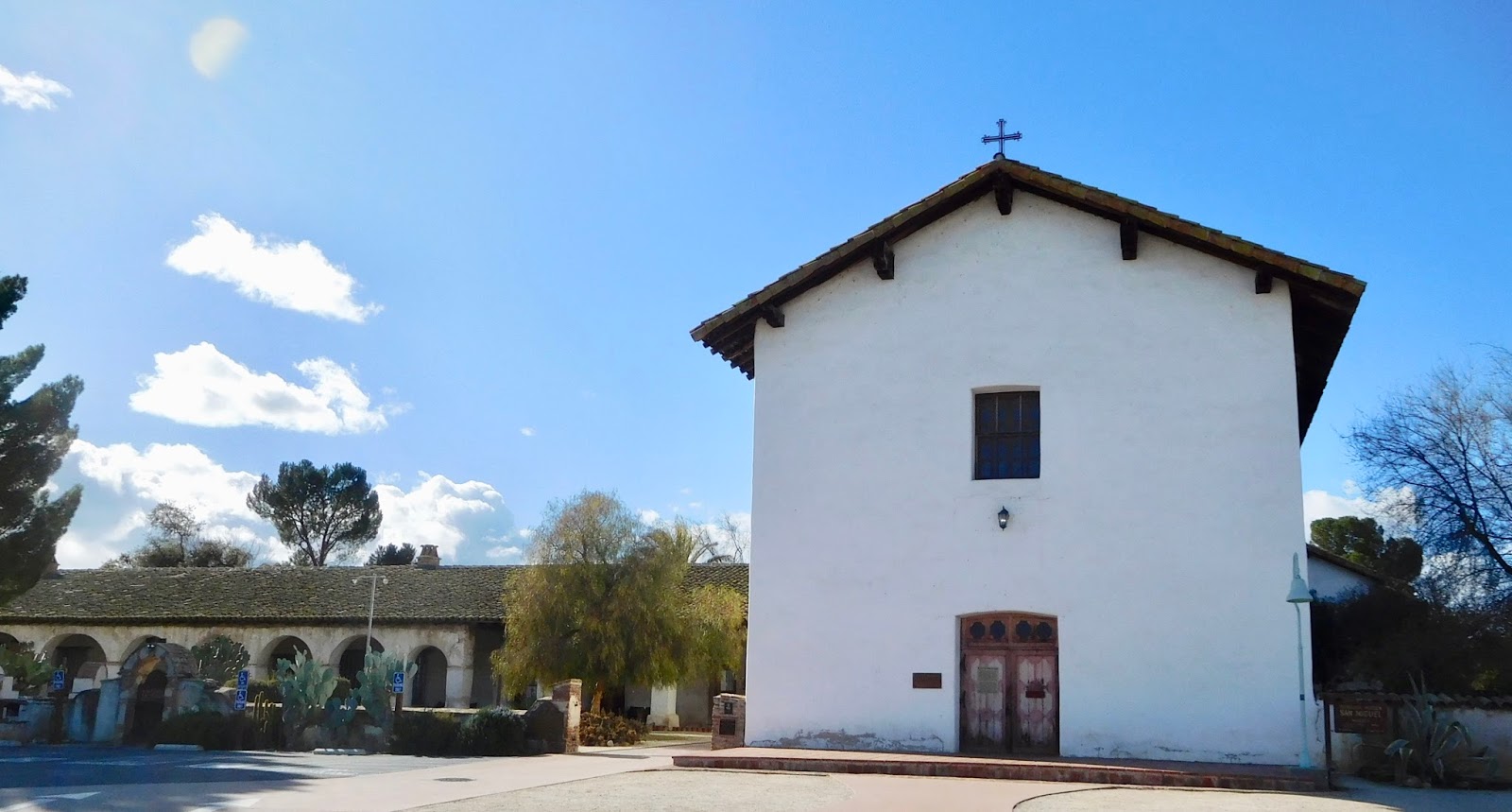
As a means of balancing the worldly ways of alcohol and food, we decided to visit another California mission.  Mission San Miguel evoked an ambience of Franciscan simplicity.  


From the mission gate in front 


to the cemetery gate on the side, 


the grounds were much the same as when the mission was built, down to the dirt-covered graves in the cemetery.


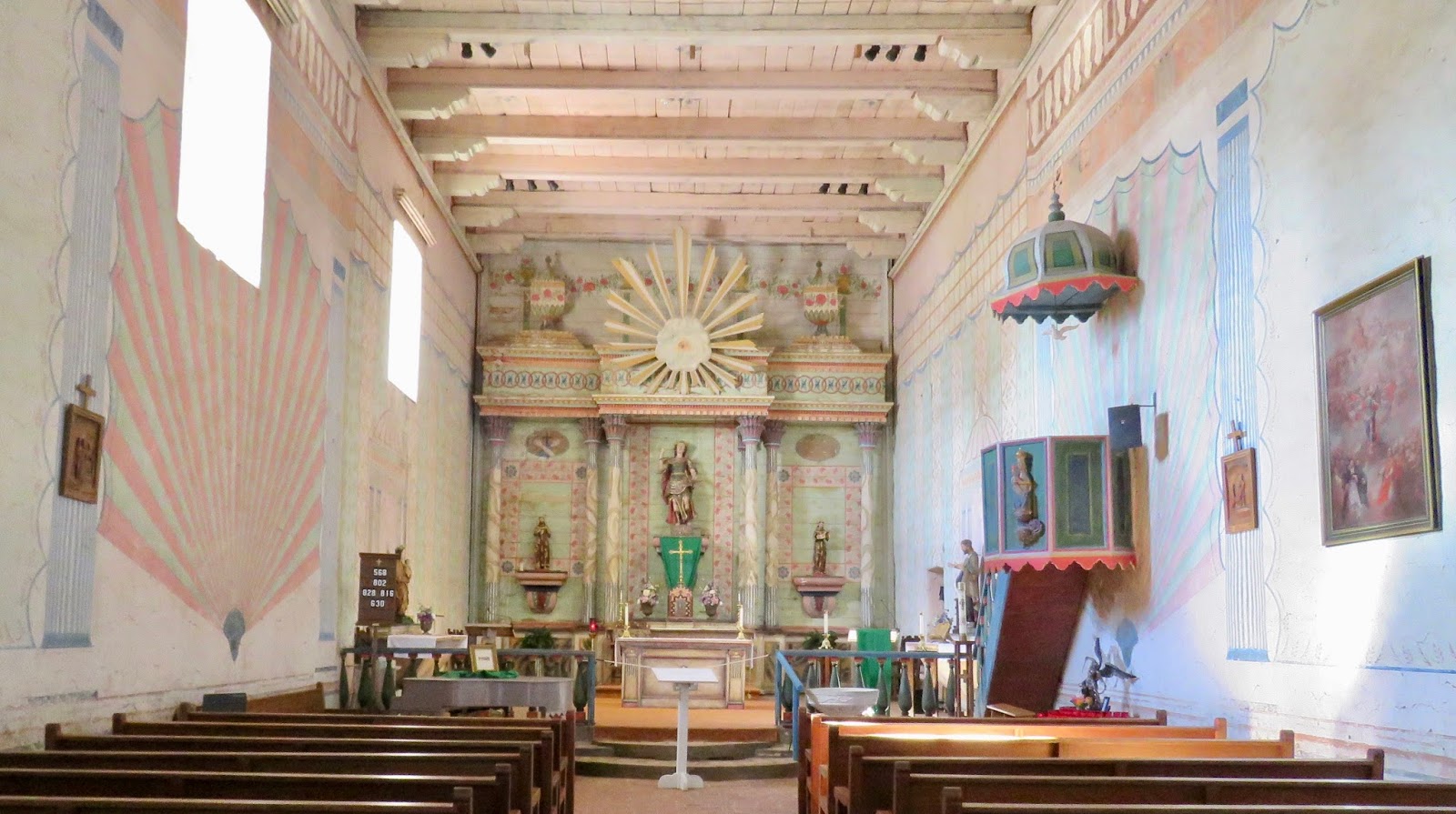
The mission church still had the original painted walls decorated with pale pastel-colored paints created out of minerals and cactus juice.


The prominent “Eye of God” suspended over the statue of St. Michael in the sanctuary made a strong religious statement…


From Paso Robles, just 25 miles inland from the beach, we had an easy drive to the coast for some enjoyable day trips…  


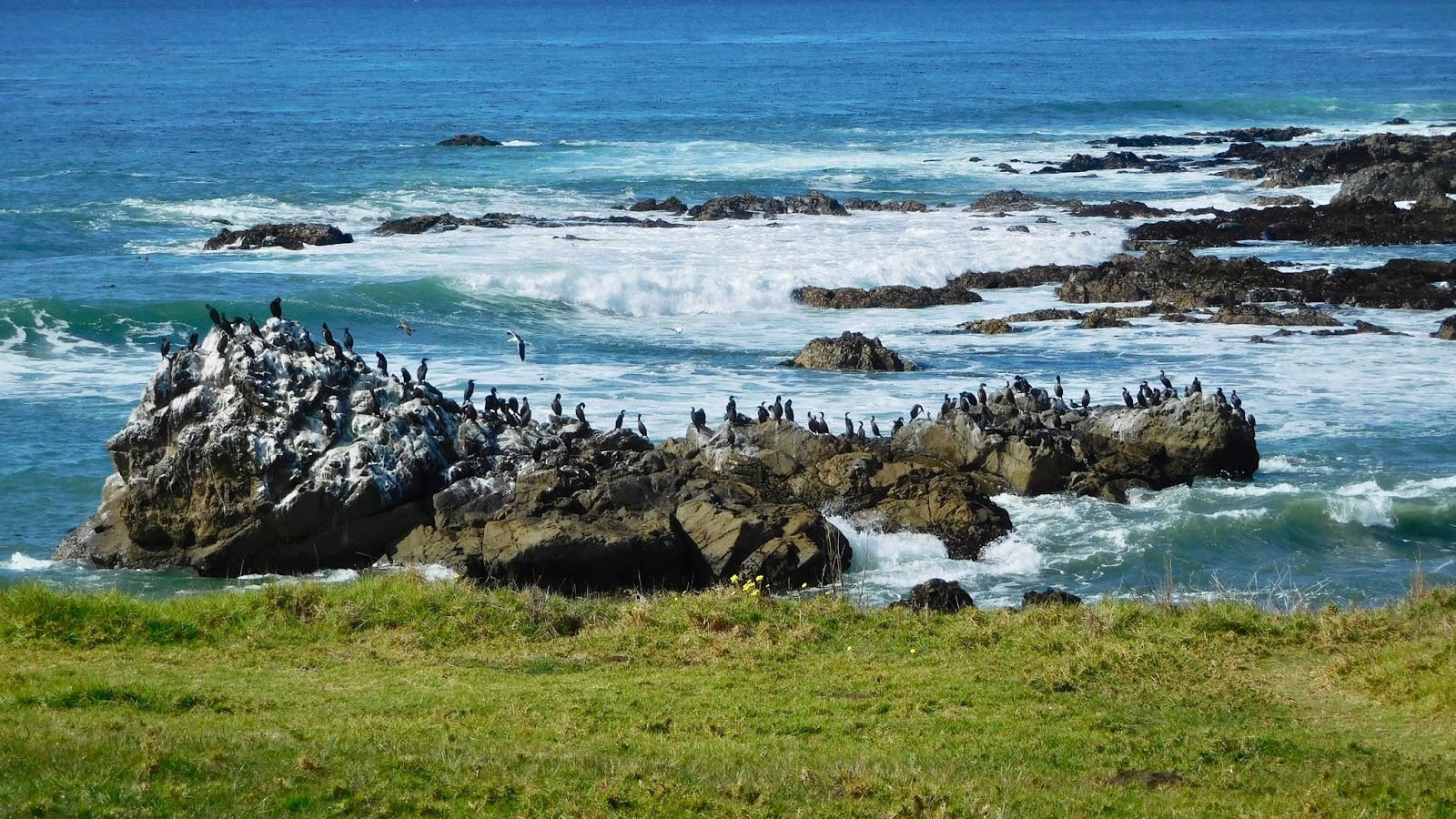
We had heard from one of the locals that Fiscalini Ranch Preserve had some spectacular hiking on a bluff trail along a mile of oceanfront near the tiny town of Cambria.  


Quirky wooden benches were strategically located for maximum appreciation of the views.


Here, the mild winters and moderate summers were the perfect combination for awesome flowers, even in the middle of winter…


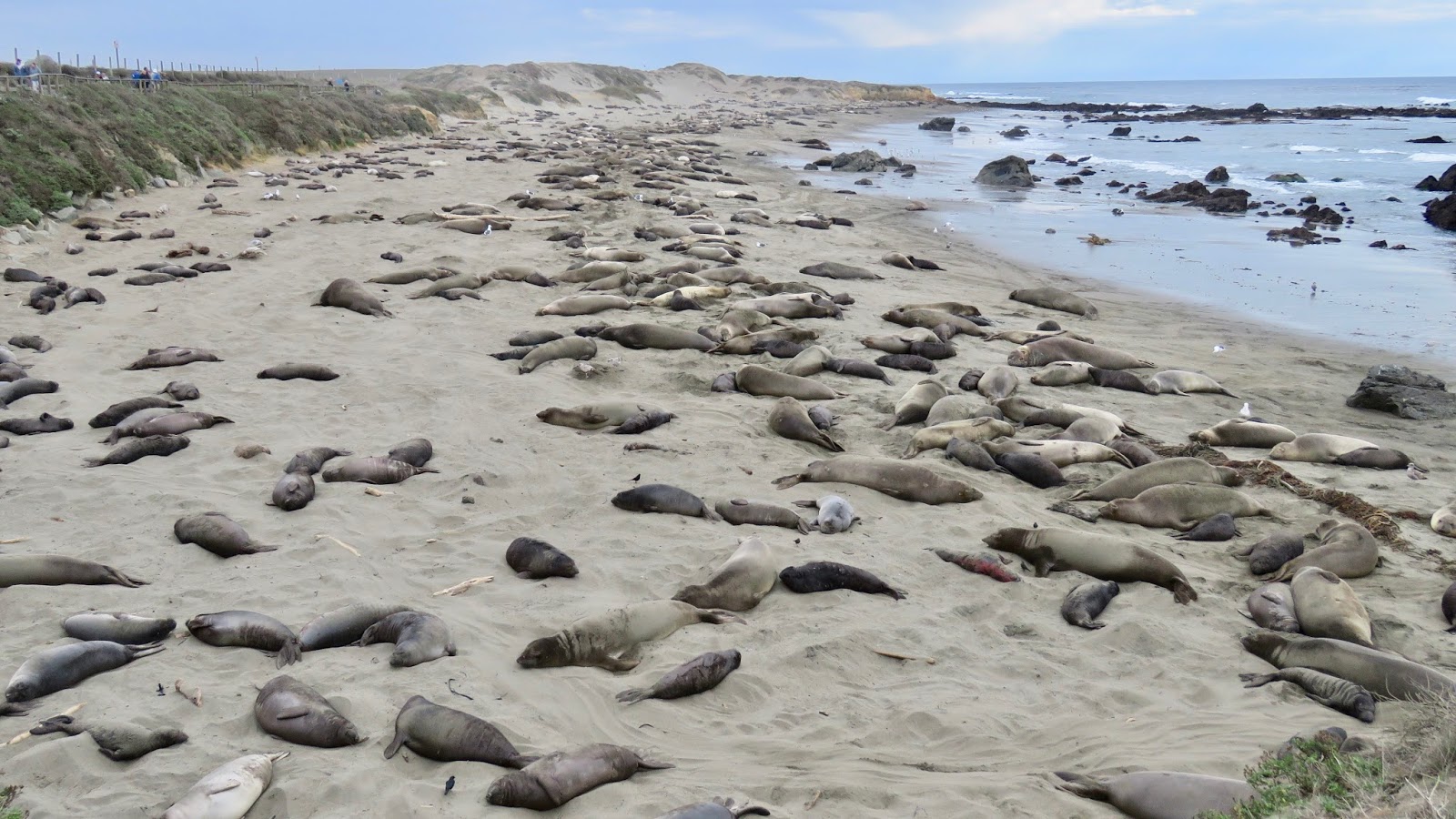
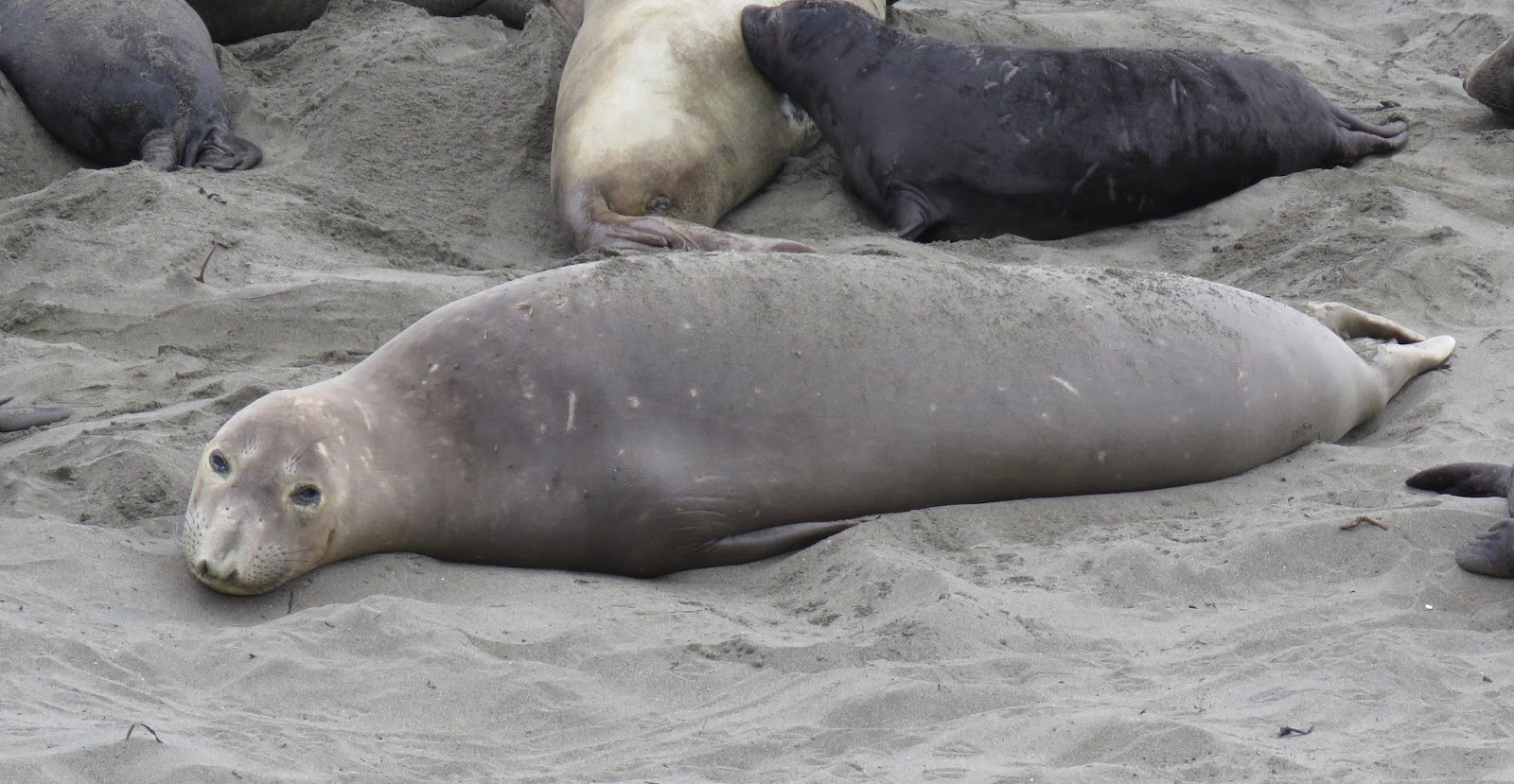
While we were on the coast, we took a short drive to the beach where the elephant seals were in the middle of their winter rest and mating season.  


Females with soulful eyes, staring at the crowds on the boardwalk above, 


put up little resistance when powerful males, identified by a large hook-like nose (proboscis) and a pink-colored chest shield, 


decided it was time for a little species propagation.  


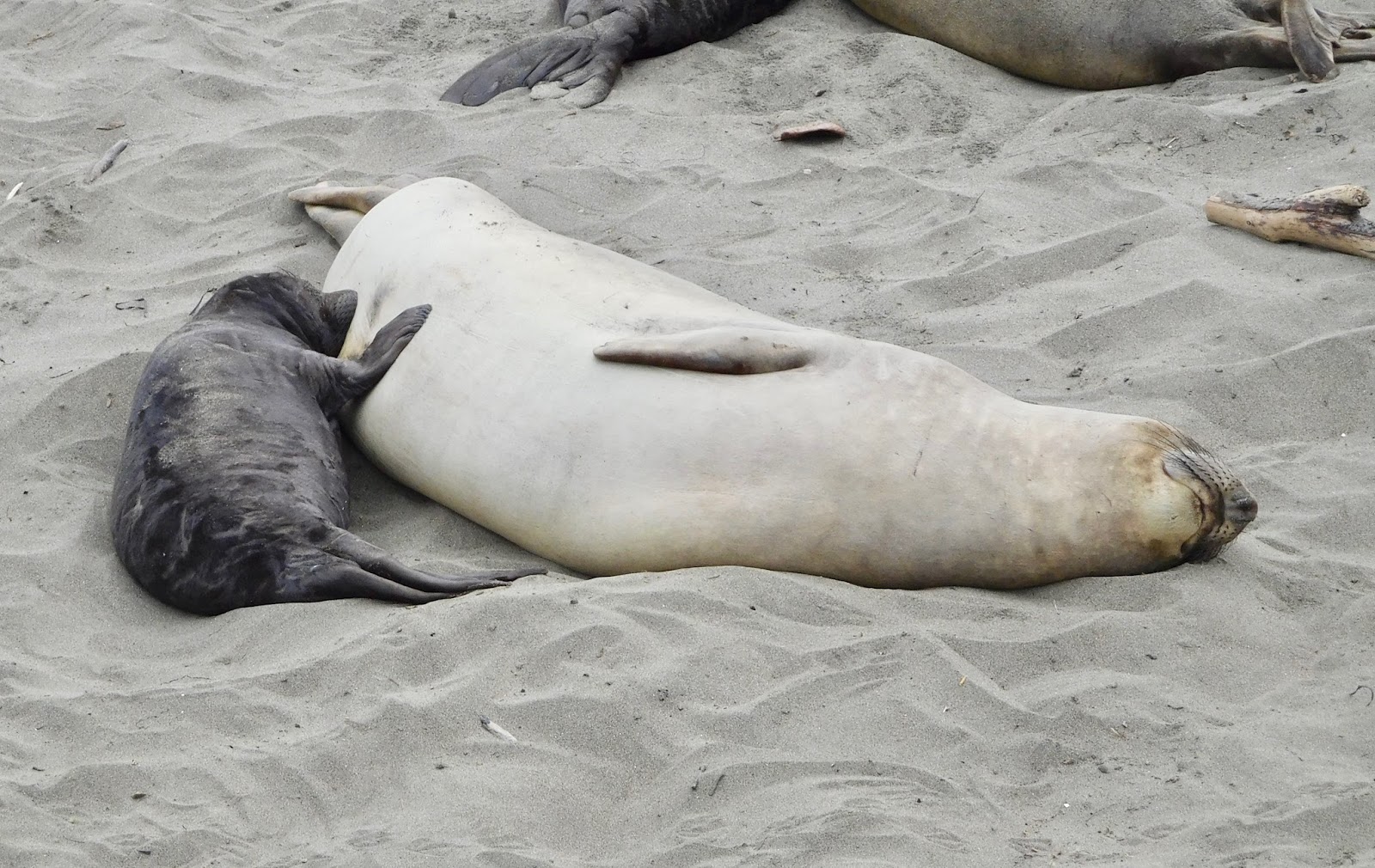
Although most of the elephant seals on the beach seemed to be sleeping, there was a fair amount of grunting and snarling vocalization, sparring between males,


and nursing pups.


What an entertaining section of beach where the elephant seals have been coming to breed and rest since 1990!  We greatly enjoyed this unique opportunity to view these magnificent creatures of the sea in their natural environment. 

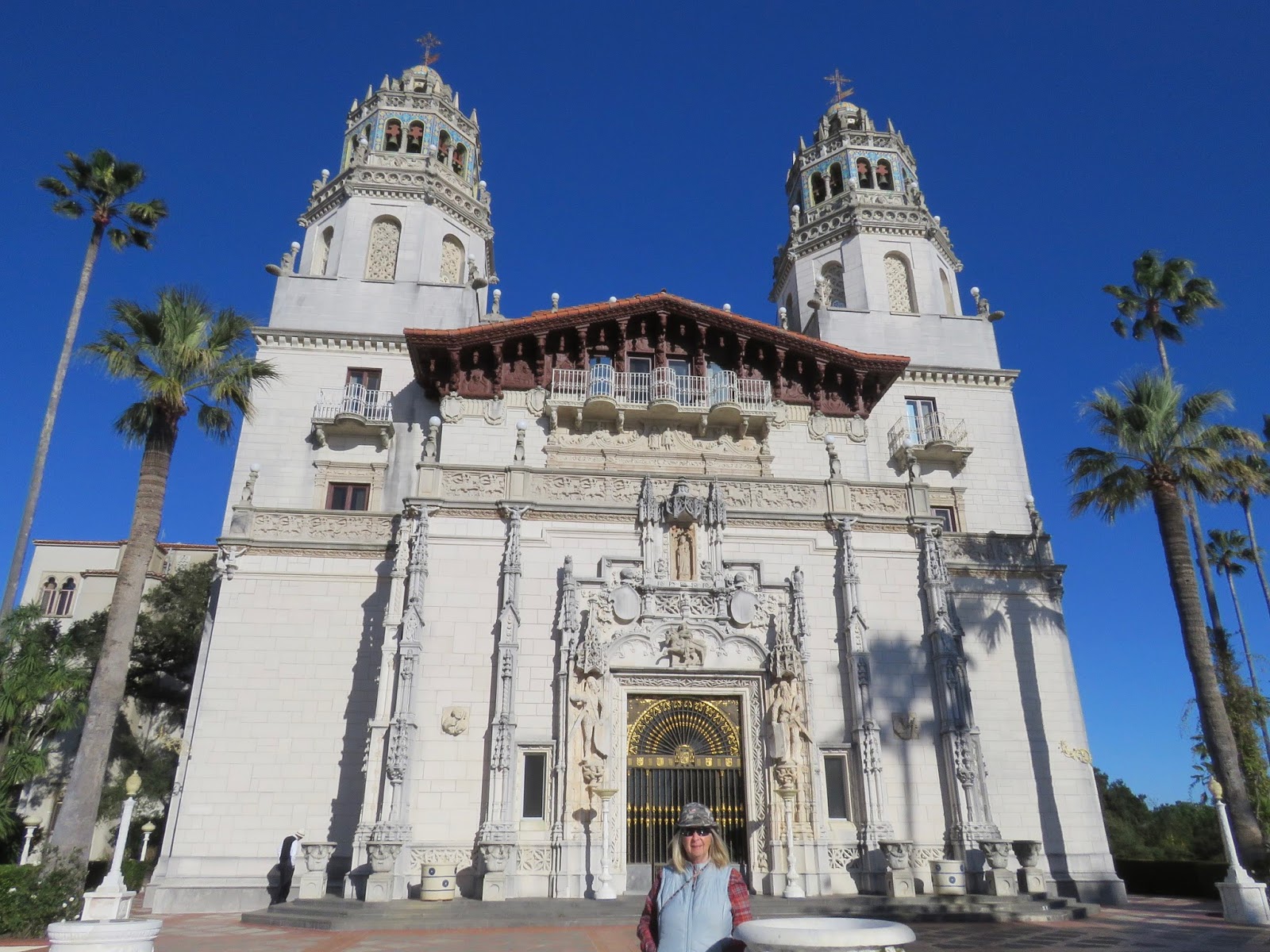
It wasn’t only the elephant seals that were responsible for making this section of the Central California Coast a popular tourist destination.  Just a few miles down the road was the palatial home named Hearst Castle!


On the top of a hill several miles inland, the castle complex towered over California’s Central Coast.


In an agreement with the State of California, 82,000 acres of Hearst Ranch has been preserved from development.

As the tour bus wandered up the hill on the winding approach to the castle, the grandiosity of William Randolph Hearst’s imagination became apparent.


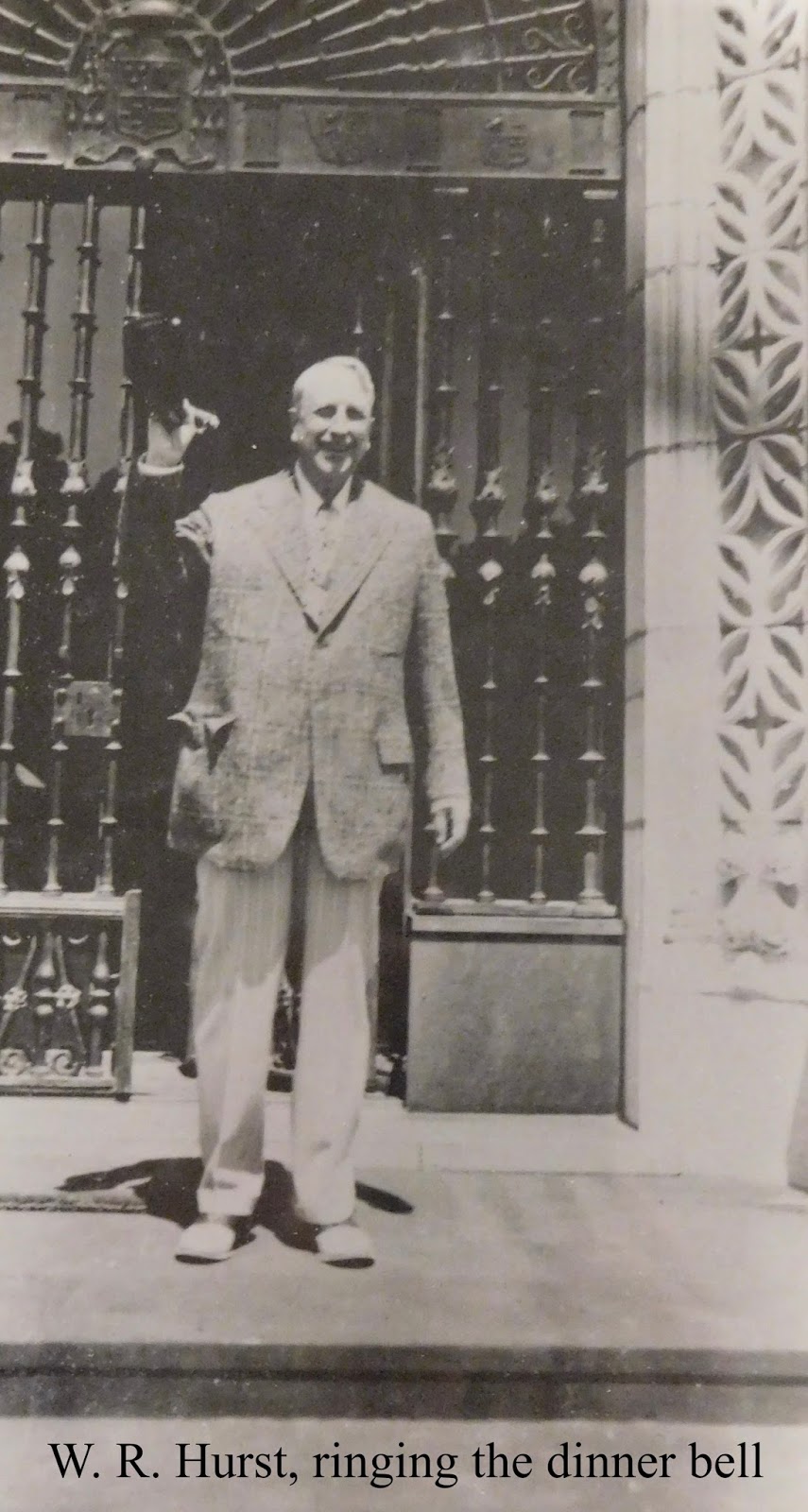
Hearst was a wealthy newspaper publisher and had often vacationed as a young boy on the spot where he commissioned Julia Morgan 


to build his hilltop dream home.  Ironically, the project was never fully completed, even after 28 years of construction, but enough was built that W.R. Hearst enjoyed many years of hosting lavish parties at Hearst Castle for the rich and famous, many of them Hollywood stars of the era.

The famous blue-tiled Neptune pool 


was in the midst of a major renovation, but there was plenty elsewhere to capture our attention…

the lavish entrance,


the grand social Assembly Room, 


where guests gathered for cocktails and lively conversations before dinner in an equally grand dining room.


All of the public rooms in the castle displayed Hearst’s priceless art collection of tapestries, statues, and paintings.

In Hearst’s day, after-dinner social niceties continued in the library,


with Hearst’s open invitation to swim any time in the indoor Roman pool that had an eye-popping design that featured more than a million Murano glass tiles.


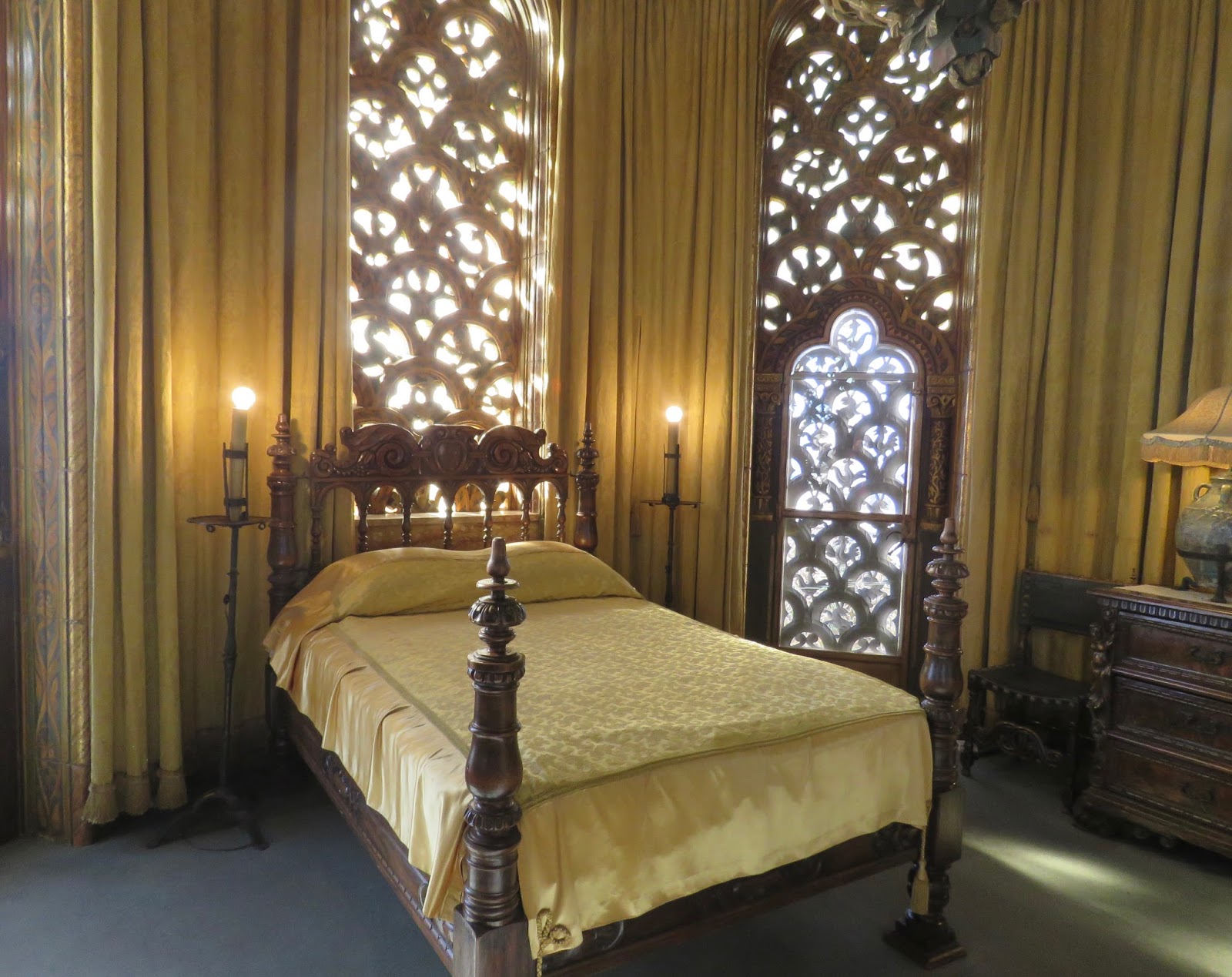
Surprisingly, the bedrooms were on a “little less” massive scale, impressive but functional.  The “Cadillac” of bedrooms was the tower bedroom,


a favorite of Marion Davies, William Randolph Hearst’s devoted mistress, and the “real hostess” of Hearst Castle for many years.


The outdoor grounds surrounding the castle were equally sumptuous, including the outdoor tennis court,


and many garden nooks and crannies adorned with priceless classical sculptures.


Our stay in well-regarded Paso Robles wine country was a satisfying one for our uneducated wine palates. I’d like to think that now we could hold our own a bit more in any conversation about great wine.  We so admired the animal life and hiking on this unsurpassed section of California coast.  We also left with reeling images and mixed feelings about the ostentatious display of wealth at Hearst Castle.